Fire damage restoration in Queens: what to know
Queens is the most varied borough by housing type, and its pest profile varies with it. The dense pre-war co-ops and garden-apartment buildings of Jackson Heights, Flushing and Forest Hills carry the shared walls, courtyards and ageing plumbing that let mice and German cockroaches move between units, while the borough's intense restaurant and market corridors — Roosevelt Avenue, Main Street in Flushing, Steinway Street in Astoria — drive some of the strongest rodent and roach pressure in the city.
Newer high-rise towers in Long Island City and older converted-industrial stock add elevator- and riser-borne rodent and cockroach pressure plus 'water bugs' from shared basements, and high tenant turnover across the rental stock keeps bed bugs a live concern in dense neighbourhoods like Jackson Heights and Jamaica.
Much of Queens, though, is detached and semi-detached single-family homes with yards — Bayside, Queens Village, Middle Village, Ozone Park — a profile heavier on ants, stinging insects, wildlife (squirrels, raccoons) and seasonal mosquitoes than apartment pests, with park edges like Alley Pond, Flushing Meadows–Corona and Juniper Valley adding warm-season outdoor pressure that pushes indoors as the weather cools.
How much does fire damage restoration cost in Queens?
$4–$7
Per sqft (national); average ~$5.50/sqft. Total project cost typically $3,098–$51,243 (national average ~$27,091) — extremely wide because scope ranges from smoke-only to full structural rebuild; lead with the per-sqft figure, not the total-job range.
US national figure — NYC typically runs higher.
Market range — not our quote
This is a market range synthesised from published cost guides — not a quote from this provider. The actual price depends on an in-person or photo-based inspection.
US NATIONAL — NYC typically higher, but no NYC premium figure sourced for this specific service. Total-job range is very wide (small smoke job vs. structural fire) — lead with the per-sqft figure on-site, not the total-job range, to avoid misleading readers.
What drives the price
- Extent of structural vs. cosmetic damage
- Smoke/soot penetration into materials
- Water damage from firefighting efforts (often combined job)
- Labor share of cost (50–70% of total per industry guides)
Signs you need fire damage restoration
- A fire — kitchen, electrical or structural — has left soot, smoke residue or a lingering odor
- Water damage from firefighting efforts is present alongside fire and smoke damage
- Smoke smell persists in the space days after the fire, even with windows open and fans running
- You need a professional structural assessment before repair or rebuild work can start
- Furniture, documents or electronics were exposed to smoke or fire and may still be salvageable
How we treat fire damage restoration in Queens
A fire loss is almost never just fire damage. In nearly every case, the water used to extinguish the fire creates a second layer of damage on top of the soot and smoke — meaning a fire-restoration job has to run water-damage extraction and drying alongside soot and smoke cleanup, not as an afterthought. We treat the two as a single combined loss from the first walkthrough, because ignoring the water side while focusing only on visible soot leaves the same mold-growth risk as any untreated water-damage job.
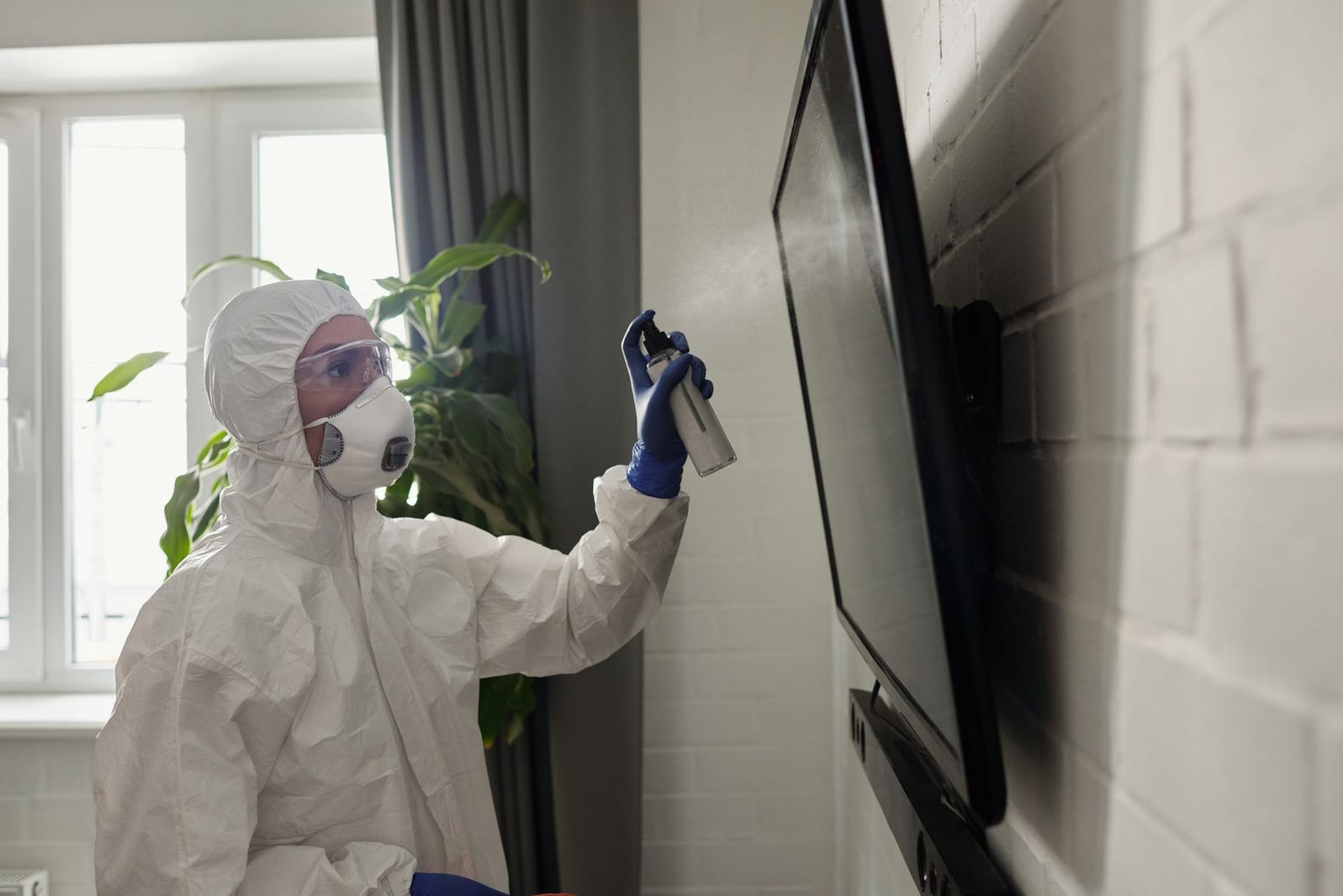
Smoke and soot residue behaves differently depending on what burned and how hot the fire got — protein-based smoke from a kitchen fire leaves a different residue than the acidic soot from a structure fire involving synthetic materials, and each responds to different cleaning chemistry. For lingering odor that's worked its way into porous materials (drywall, insulation, fabric), surface cleaning alone often isn't enough; we use methods like ozone treatment or thermal fogging, which neutralise odor molecules that have penetrated materials rather than just masking the smell.
Local landmarks & coverage
We serve all of Queens and the surrounding Queens area — including Flushing Meadows–Corona Park, Citi Field, USTA Billie Jean King National Tennis Center, Rockaway Beach, Astoria Park, Queens Boulevard — across ZIP codes 11354, 11355, 11372, 11375, 11101, 11102, 11103, 11385, 11432, 11435.